
Chain link fence is often ordered in large roll quantities, and small packing decisions can affect installation speed, resale condition, and container loading cost. A complete order should define the mesh opening, wire diameter, roll height, roll length, selvage type, coating, color if applicable, accessories, labels, pallet method, and destination unloading conditions.
For buyers comparing fence products, the broader wire mesh fence page is a good starting point. This article focuses on chain link fence packing and quality checks for export orders.
Confirm the fence fabric specification first
The basic fence fabric details are mesh opening, wire diameter, roll height, roll length, material, and coating. Common opening descriptions may be given in millimeters or inches. Wire diameter may be written in millimeters, BWG, SWG, or gauge, so the unit should always be clear. For coated fence fabric, buyers should confirm whether the diameter is before coating or after coating.
Selvage is also important. Some projects require knuckle edge, twist edge, or a specific top and bottom finish. If the fence fabric must match posts, rails, fittings, or an existing project, send drawings or photos before quotation.
Coating and color need practical inspection
Common finishes include galvanized chain link fence and PVC coated chain link fence. Outdoor projects need coating suited to the local environment. PVC coated fence also needs color confirmation, surface appearance, coating adhesion, and packing protection to reduce rubbing damage during shipment.
Inspection should not only show a full roll. Ask for close photos of mesh opening, wire diameter, coating surface, selvage, roll end, and any area where the coating may be affected by packing pressure. For repeat orders, compare new inspection photos with the approved previous order.
Accessories should be counted with the fence order
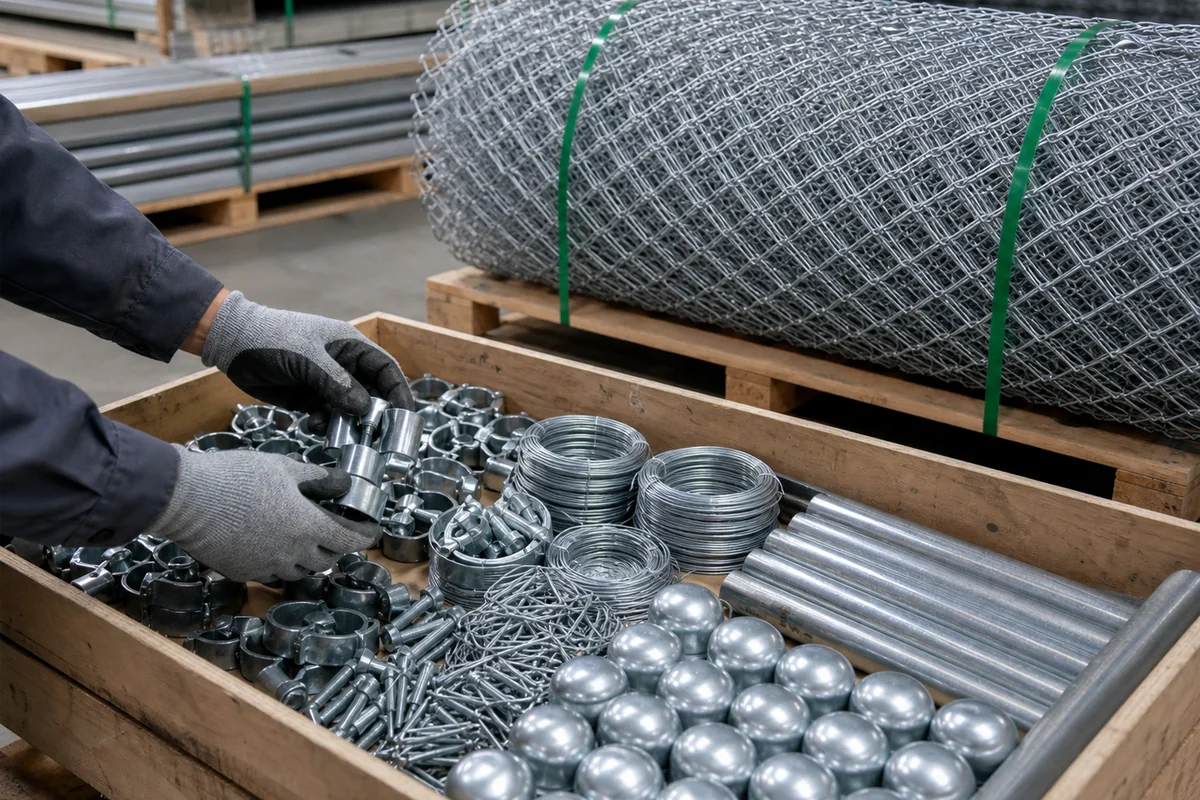
A chain link fence shipment may include posts, rails, tension wire, tie wire, clamps, caps, tension bars, brace bands, gate parts, and other fittings. The accessory list should be confirmed before packing, especially for project jobs where missing small parts can delay installation. If accessories are supplied in cartons or crates, ask for packing photos and carton count.
For mixed shipments, separate fence fabric, posts, and fittings clearly in the packing list. This helps the buyer check arrival quantities and allows the installer to locate parts quickly at the jobsite.
Roll and pallet packing should match the unloading plan
Chain link fence rolls can be wrapped with plastic film, woven bag, or other protective material, then bundled or placed on pallets. The best method depends on roll height, roll length, coating, order quantity, and how the customer will unload. Heavy rolls without a clear pallet plan can create handling problems at the destination warehouse.
Buyers should confirm roll count per bundle, pallet dimensions, gross weight, label requirements, and whether rolls need to be loaded vertically or horizontally. For PVC coated fence, packing should reduce surface rubbing. For retail or distributor orders, label position and roll appearance may matter more than for project-only shipments.
Container loading should be checked against roll weight
Chain link fence rolls can occupy more volume than buyers expect, especially when the roll height is large or when each roll needs protective wrapping. A loading plan should consider roll diameter, roll weight, pallet size, container height, and whether posts or fittings are loaded together. If a buyer needs mixed sizes in one container, the supplier should confirm how rolls will be separated and identified at destination.
For distributors, arrival appearance is important because rolls may go directly into warehouse stock. For contractors, unloading speed and part matching may matter more. In both cases, the packing list should connect roll counts, accessory cartons, and pallet numbers so the buyer can inspect the shipment without opening every bundle at once.
Ask for shipment evidence before loading is complete
Useful QC evidence includes roll measurements, mesh opening, wire diameter, coating surface, accessory packing, labels, pallet condition, and loading photos. A simple checklist helps both sides avoid disputes after the container arrives.
If the order also includes welded fence panels or security panels, compare requirements with the welded wire mesh specification guide. For chain link fence quotation or packing review, send your roll size, wire diameter, opening, coating, quantity, and destination through the contact page.