
Stainless steel wire mesh is used for filtration, screening, drying, baking, machine protection, ventilation, separation, and fabricated mesh components. For industrial buyers, the grade is only one part of the decision. The final specification should also define mesh construction, mesh count, wire diameter, roll width, sheet size, frame structure, edge finishing, cleaning requirement, and inspection method.
Anping Mesh Factory focuses on stainless steel mesh grid products such as drying and baking trays designed for airflow, baking mesh, and industrial equipment protective mesh guards. For broader stainless mesh requests, start with the stainless steel wire mesh category and then confirm the details below.
Start from the application, not only the grade
Stainless steel grade selection should match the working environment. A dry indoor guard panel, a food-processing drying tray, a chemical screening mesh, and an outdoor protective mesh do not face the same conditions. Buyers should describe temperature, moisture, cleaning method, contact material, corrosion risk, load, abrasion, and whether the mesh will be welded, framed, bent, or cut after weaving.
Common stainless grades such as 304 and 316 are often discussed because of corrosion resistance requirements. 316 is commonly selected when the environment is more demanding, but the buyer should always confirm the grade against the actual use condition and any local project requirement. If food contact, medical, chemical, or safety regulations apply, the buyer should provide the required standard or approval rule.
Mesh construction changes the quotation
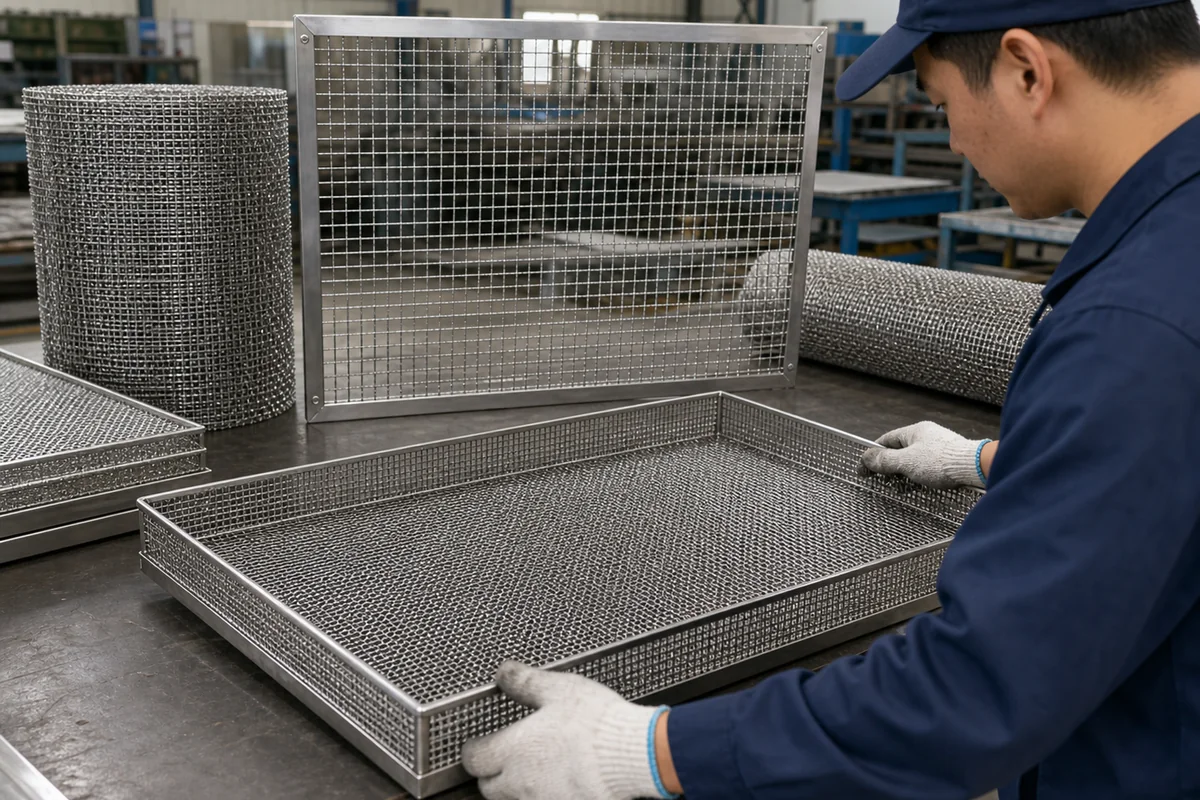
Stainless steel woven mesh, welded mesh, perforated sheet, expanded mesh, cable mesh, and framed tray mesh are different products. Woven mesh is often specified by mesh count, wire diameter, weave type, roll width, and roll length. Welded mesh is specified by opening, wire diameter, panel or roll size, and weld quality. Framed trays and guards need drawing dimensions, frame type, weld position, flatness, and edge treatment.
If the product is used for filtration or screening, mesh count and wire diameter must be clear. If it is used as a protective guard, opening size, rigidity, frame strength, and installation points may be more important. If it is a drying tray, airflow, tray size, load, cleaning, and stacking method should be considered together.
Wire diameter and opening affect strength and airflow
For a mesh tray or guard, thicker wire can improve rigidity but may reduce open area or increase weight. Larger openings improve airflow or visibility but may reduce protection or screening accuracy. Buyers should avoid choosing a mesh only from a photo. A drawing, sample, or clear measurement is more reliable.
When the mesh will be cut or framed, include tolerance and edge finishing requirements. Sharp edges, burrs, uneven welds, or frame distortion can create installation and cleaning problems. For repeated industrial orders, a confirmed sample can help lock the expected finish before bulk production.
Cleaning and surface condition should be discussed early
Stainless mesh for drying, baking, or equipment protection may be handled frequently. Buyers should confirm whether the surface needs to be smooth, easy to clean, free from heavy oil, or suitable for a specific cleaning process. If the mesh is used in food-processing equipment, the buyer should provide the required material and hygiene rules for the target market.
For fabricated trays, guards, and baskets, ask for photos of weld points, frame corners, flatness, handle or hook area, and stacked packing. Surface scratches can occur if stainless pieces are packed too tightly without protection, so packing method should be part of the specification.
Use inspection photos to confirm the final order
Useful inspection photos include grade or material confirmation documents when required, mesh count or opening, wire diameter, roll width, sheet size, tray dimensions, frame structure, weld position, edge finish, flatness, packing, and labels. A short inspection list avoids vague quality comments after shipment.
If you are still comparing stainless mesh with galvanized or PVC coated products, use the wire mesh importer checklist to prepare the complete inquiry. For custom stainless trays, baking mesh, or protective mesh guard discussion, send drawings and photos through contact Anping Mesh Factory.