
Wire mesh quotation work becomes much faster when the buyer sends a complete specification at the beginning. A product name such as welded wire mesh, stainless steel mesh, chain link fence, gabion mesh, or steel grating is only a starting point. The final price depends on the application, material, opening, wire diameter, roll or panel size, surface treatment, packing method, and destination requirements.
This checklist is written for importers, distributors, contractors, and industrial buyers who need a practical way to organize the request before contacting a factory. If you are comparing several mesh types at the same time, start from the category overview in our wire mesh product catalog and then narrow the specification step by step.
1. Start with the working environment
The same mesh can perform very differently depending on where it is used. Before asking for a price, describe whether the mesh will be used for fencing, filtration, screening, reinforcement, drainage, machine guarding, drying trays, gabion baskets, or warehouse protection. Also mention indoor or outdoor use, moisture, chemical exposure, vibration, load, animal contact, food-processing conditions, or installation near coastal air.
For example, an outdoor fence order usually needs coating thickness, roll height, post matching, and long-distance packing details. A stainless steel drying tray order needs airflow, tray size, frame structure, edge finishing, and cleaning requirements. A quarry screen order needs aperture, wire diameter, edge hook, screen deck size, and abrasion conditions.
2. Define the mesh construction clearly
Use the correct construction name wherever possible: welded mesh, woven mesh, crimped mesh, expanded metal, perforated sheet, hexagonal netting, gabion mesh, bar grating, or chain link fence. If you are not sure, send a clear photo or drawing and mark the required opening size. A short explanation of the end use helps the quotation team avoid recommending the wrong construction.
Buyers often describe several products with one general word, but production and inspection are different. Welded mesh is checked for wire diameter, opening, weld point, roll width, and panel flatness. Woven stainless mesh is checked by mesh count, wire diameter, weave type, roll width, and edge condition. Steel grating needs bearing bar size, cross bar pitch, panel size, surface finish, and load-use context.
3. Confirm aperture, wire diameter, and size
The most important numbers are usually mesh opening and wire diameter. Use millimeters, inches, BWG, SWG, or gauge only when the unit is clear. If the order is a roll, include roll width, roll length, and roll weight expectation if it matters for handling. If the order is a panel or sheet, include panel length, width, thickness, tolerance, and whether cutting or bending is required.
For welded mesh and reinforcement mesh, opening is often described center-to-center or clear opening depending on the buyer's habit. To avoid misunderstanding, a drawing is better than a text-only request. For stainless woven mesh, include mesh count and wire diameter. For perforated sheet, include hole diameter, pitch, pattern, sheet thickness, and margin if the edge area matters.
4. Match material and finish to the job
Material and surface treatment should be chosen for the environment, not only for the lowest price. Common options include low carbon steel wire, galvanized wire, stainless steel, PVC coated wire, galvanized sheet, and expanded or perforated metal sheet. Outdoor use often needs galvanized or coated material. Food-processing trays and corrosion-sensitive equipment usually require stainless steel, and the grade should be confirmed by the buyer's working environment and local compliance requirements.
If coating is important, specify hot dipped galvanized, electro galvanized, PVC coated, powder coated, or another finish. For color coated products, provide the color reference and expected surface quality. For project orders, ask whether coating photos, thickness checks, or sample confirmation are needed before mass production.
5. Decide the packing method before production
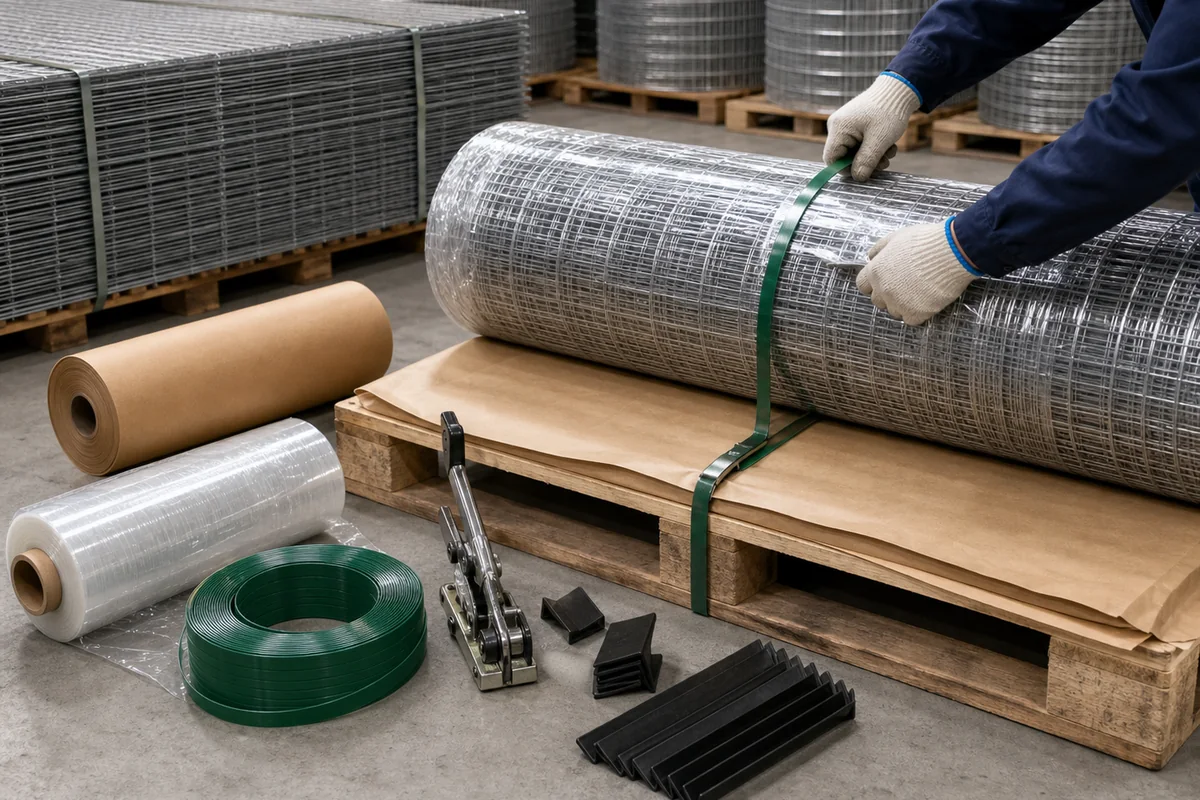
Packing is not a final detail; it affects roll size, pallet dimensions, container loading, damage risk, and unloading work at destination. Common packing options include waterproof paper, plastic film, woven bag, straps, wooden pallets, metal pallets, crates, labels, and carton packing for accessories. Export buyers should confirm whether each roll or panel needs a label, whether pallets must fit a warehouse rack, and whether the container will be unloaded by forklift or manually.
For project or repeat orders, include packing photos as part of the inspection request. This is especially useful when the mesh will be resold under a distributor system or delivered directly to a construction site.
6. Use a simple quotation message
A complete inquiry can be short. Include product type, application, material, opening, wire diameter, roll or panel size, surface treatment, quantity, packing method, destination country, and any drawing or reference photo. If you need help checking the specification, send the information through the contact page and our team will review the quotation details.
After reading this checklist, you can also compare more specific notes such as the welded wire mesh specification guide when your order is mainly rolls or panels. Clear details at the beginning reduce repeated emails, wrong samples, and production delays.